Do Private Schools Follow the Ontario Curriculum?
Category: Insights
No. A private school the Ministry does not inspect is not required to follow the official Ontario curriculum, though the province still says such a school should offer general elementary subjects such as mathematics, science, language and social studies. There is one place the curriculum is required, and it is the high school courses that grant credits toward the Ontario diploma.
When parents ask whether private schools follow the Ontario curriculum, they are usually asking three narrower questions underneath it. If you are comparing one private school in York Region against another, those three are the ones worth answering: will my child be behind, will my child be able to move back into the public system, and is anyone actually checking. Each one has an answer. None of them turns on the label a school puts on its website.
Which Private Schools Have to Follow the Ontario Curriculum
Ontario’s hard interest is the diploma, not the school. The Government of Ontario is the only authority that can determine the courses of study a student must complete to earn the Ontario Secondary School Diploma, and it says so plainly. A credit carrying that diploma’s name has to be earned against provincial standards. Below that credit, a school’s program is the school’s own.
What Ontario Actually Says About Private Schools and the Curriculum
The Ministry of Education puts it in one sentence: schools it does not inspect do not need to follow the official Ontario curriculum. The same page carries the qualifier that makes the sentence honest. Those schools should offer general elementary or secondary subjects such as mathematics, science, language and social studies. Should is the province’s own word, and it belongs at exactly that weight. It is not a requirement the Ministry enforces, and it is not a throwaway. So the picture is not a school free to teach anything at all. It is a school expected to cover the ordinary subjects of an education, deciding for itself how it covers them, in what order, and on what timetable.
What the Ministry of Education Does Not Do for a Private School
The Ministry is direct about the limits of its own role. For private schools it does not provide funding or financial support, regulation, licensing, accreditation, or oversight of operations. That list is why the curriculum answer reads the way it does. There is no provincial licence to hold and no program to be approved, so below the diploma there is nothing for a curriculum requirement to attach itself to.
Read the list for what it says and not for more. Ontario sets out who must attend school in the Education Act, and private schools sit inside that framework rather than outside it. Every private school in the province files a notice with the Ministry each year saying it intends to operate. That filing is a requirement of the Education Act, and it is not an approval of what the school teaches. Fire, building, public health and municipal rules reach a private school the way they reach any other place where children spend their days.
The Exemption Applies to Schools the Ministry Does Not Inspect
The line that decides this runs between inspected and non-inspected schools, not between private and public ones. The Ministry inspects private high schools that are seeking, or have already been approved, to grant course credits toward the Ontario diploma, and inspection is what makes the curriculum mandatory in those courses. So two schools can both be private, both be on your shortlist, and sit in entirely different positions.
That is why the word private tells you so little on its own. It is worth understanding which Ontario private schools are inspected and why, because that status, rather than a school’s size or its reputation, is what decides whether the curriculum question has a yes or a no attached to it.
Where the Ontario Curriculum Is Required: Grade 9 and Diploma Credits
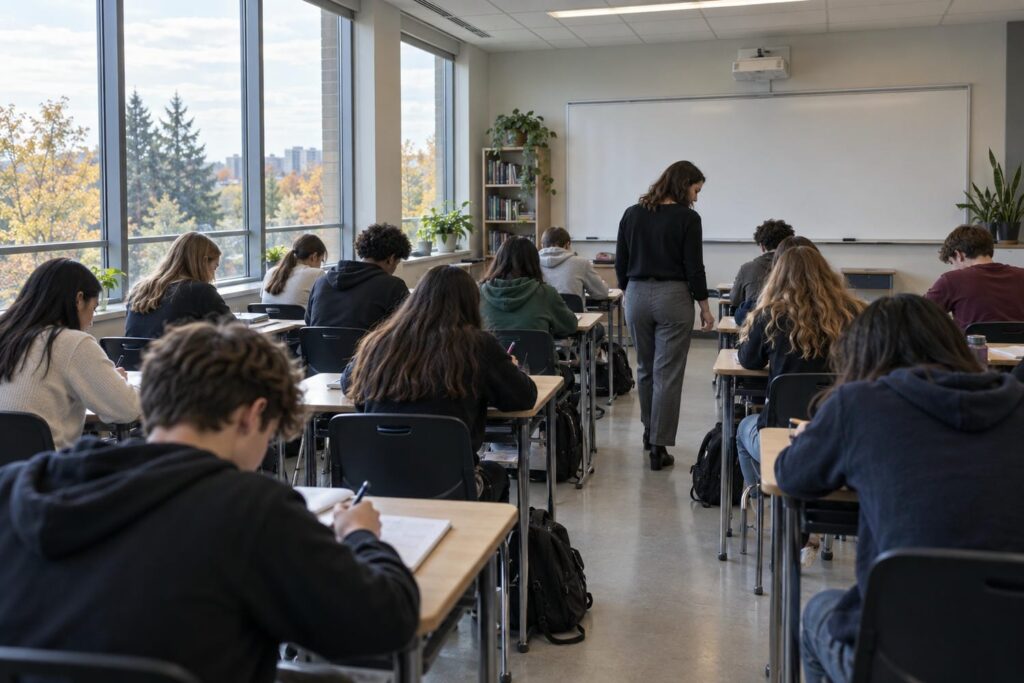
The other half of the answer is the half where the curriculum stops being optional. The obligation attaches to credit courses toward the Ontario Secondary School Diploma, and those courses begin at Grade 9. Nothing below that year carries a credit, anywhere in the province, which is why the boundary sits where it does rather than at a year a school picks for itself.
Diploma Credits Are Where the Curriculum Becomes Mandatory
For the credit courses at the private high schools it inspects, the Ministry confirms that the standard of instruction meets its curriculum requirements and its assessment and evaluation practices. That is the one place in the private system where the answer is yes.
What the Ministry stands behind is the standard of instruction in those credit courses, and nothing wider. It is not a certification of the school, the building, the staff, or of any elementary program running under the same roof. The reason the province draws its line there and not somewhere broader is that it is the only authority that can determine the courses a student must complete for the diploma. It protects the credential it issues, and it leaves the rest alone.
What a High School Credit Actually Is
A credit is a more concrete thing than it sounds. Under the Ministry’s schools policy, one credit stands for one course, and a course has to be timetabled for at least 110 hours of real class time to count. That time has to be spent on learning aimed at what the course is meant to teach, which is what makes the hours count.
The second half of the rule carries as much weight as the first: credits are granted for courses the Ministry has developed or authorized. Put the two together and the inspection program makes sense. A credit is a public claim about hours and about content, and the only way that claim holds up on a transcript years later is if somebody checked it at the time.
The answer changes once, and it changes at Grade 9.
| Stage of school | Does the Ontario curriculum apply? | What the Ministry checks | What a parent can check |
| Kindergarten | No. Ontario’s Kindergarten program is written for the publicly funded system. | Nothing about the program. The school’s annual notice to operate is a filing, not an approval of what it teaches. | Whether the early program builds language, number sense and social skills, and how the school tells you what it is seeing. |
| Grades 1 to 6 | No, for a school the Ministry does not inspect, though the province says general subjects such as mathematics, science, language and social studies should be offered. | No review of the program, and EQAO’s Grade 3 and Grade 6 assessments are a school’s own choice rather than a requirement. | How the school’s coverage compares with the provincial areas: the arts, French from Grade 4, language, health and physical education, mathematics, science and technology, and social studies. |
| Grades 7 and 8 | No. The expectation of general subjects still applies, and the provincial subject list itself changes at Grade 7. | Still no review of the program, and there are no diploma credits at stake yet. | How the school handles history and geography in these years, and whether the work is building toward what Grade 9 will assume. |
| Grade 9 and up, credit courses | Yes, for courses granting credits toward the Ontario Secondary School Diploma. | The Ministry inspects these schools and confirms the standard of instruction in the credit courses meets its curriculum requirements and its assessment and evaluation practices. | That a credit course is timetabled for at least 110 hours, and how the school plans for the literacy graduation requirement. |
What the Ontario Curriculum Sets Out for the Elementary Years
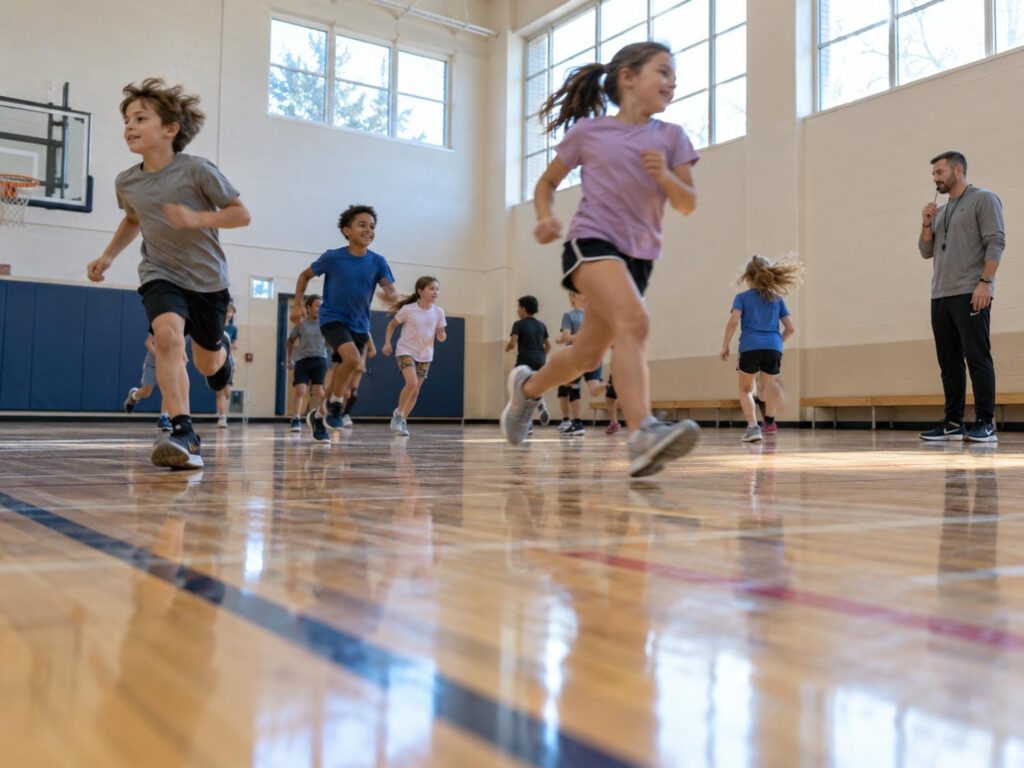
A school that does not have to follow the curriculum can still read it, cover comparable ground, and tell you where it sits against it. The Ontario curriculum is published subject by subject and grade by grade, and it is free to read. Any parent can open it, and so can any school. Kindergarten has its own provincial program, set out separately from the Grade 1 to 8 curriculum. All of it is a useful reference point when you are weighing a private school against your local public school.
The Subjects Ontario Builds Its Elementary Program Around
For an English-language school in the publicly funded system, the provincial program is built on a set list: the arts, French as a second language, language, health and physical education, mathematics, science and technology, social studies in Grades 1 to 6, and history and geography in Grades 7 and 8. That list is a requirement on school boards. It is not a list of things a private school must do.
It is still the most useful reference a parent has, because it turns a vague comparison into a specific one. These are the areas a private elementary school is deciding how to cover, not whether to cover. A school that covers all of them in its own order sits in a different position from one that covers only some, and the provincial list is what lets you see which one you are looking at.
How Detailed the Provincial Requirements Get
The provincial requirements get specific enough to shape a day. Every elementary student in the publicly funded system, including students with special education needs, gets a minimum of 20 minutes of sustained moderate to vigorous physical activity each school day, during instructional time rather than at lunch or after the last bell. That is the grain of the thing. Not a broad aim, a floor with a number under it.
Mathematics works the same way. Ontario protects time for daily mathematics in Grades 1 to 8 in the publicly funded system, which means the question of whether mathematics happens every day has already been settled for a public school. A private school settles it for itself. That is a real difference between the two, and it is the kind of difference a timetable shows you at a glance.
French Is Part of the Provincial Program From Grade 4
French is not an enrichment in the provincial program. Core French runs from Grade 4 through Grade 8 in the publicly funded system, where students accumulate a minimum of 600 hours of French instruction by the end of Grade 8. The province also defines its two heavier models by proportion of instruction: extended French with at least a quarter of all instruction in French, and immersion with at least half.
Those figures describe publicly funded programs, so a private French immersion program is not measured against them at all. A school with more French in its day than that is not exceeding a provincial requirement, because the requirement does not reach it. What replaces the figure is more concrete anyway. How much of the day is genuinely in French, who is speaking it and to whom, and what a child is expected to be able to do with the language by the end of a cycle are all answerable in specifics, and they tell you more than an hours total ever will.
The Curriculum Is Public, So You Can Compare It Yourself
The most under-used fact in this whole area is that the Ontario curriculum is published and free. Nobody has to request it, pay for it, or be a teacher to read it. You can open your child’s year, read for 20 minutes, and come away with two or three specifics you actually care about: what is expected in reading and writing, what is expected in mathematics, and what a child is meant to be able to do with either.
That changes what you are able to compare. Instead of a yes or a no about a label, you have a handful of concrete expectations in one hand and a real program in the other, and the two can be held up against each other. A school that knows its own program well can walk you through where it sits against those specifics, cycle by cycle, in the same level of detail you brought.
Will My Child Be Behind? What Actually Decides That
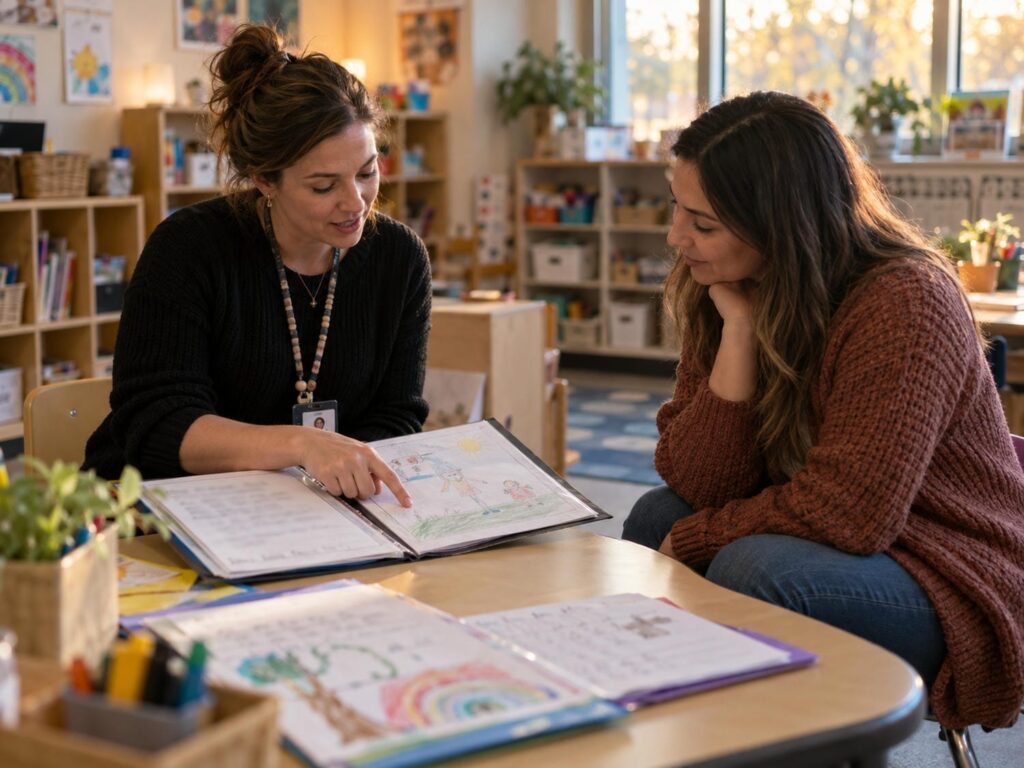
The label is the wrong thing to watch. Whether your child is fine has almost nothing to do with whether a school says it follows the Ontario curriculum, because the province does not check that claim below Grade 9. It has to do with what the school covers, what it can show you about your own child, and what it keeps on record. All three are answerable, and none of them needs the province.
Covering Comparable Ground Matters More Than Matching the Order
In our experience, coverage across the years matters far more than alignment week by week. A child who meets a given expectation a term early or a term late, while covering comparable ground, is in a completely different situation from a child who never meets it at all. The first is a scheduling difference. The second is a gap, and the two get confused constantly.
So we would not be troubled by a program that reaches long division later than the provincial schedule places it, and we would be very troubled by a program that never reaches it. The provincial subject areas are the right reference for judging this, because they describe territory rather than a timetable. Look at the territory across a whole cycle rather than a single term, and the order mostly sorts itself out.
What a School Should Be Able to Tell You About Your Child
The real risk is not a school that sequences differently. It is a school that cannot tell you where your child sits, in specifics, when you ask. What form that answer takes matters less than whether it exists and whether somebody else could read it two years later. A narrative that describes what a child can do, a portfolio of work with dates on it, a reading level tracked across a cycle: any of these does the job, provided it is written down and kept.
The provincial report card is the school boards’ instrument, so a private school reports in its own way. That is normal and it is not a shortfall. What matters is whether the reports say something specific about your child rather than something general about the class, and whether the school still has them in three years.
Do Private School Students Write EQAO Assessments?
Parents reach for EQAO because it is the one external measure most of them have heard of, and that is a reasonable instinct. The answer is simpler than people expect. For a private school, taking part is a choice, which means an EQAO result is a piece of information you may or may not get, depending on the school.
Participation Is the School’s Decision
EQAO says it plainly: private schools can choose to participate in the Primary and Junior Assessments and the Grade 9 Assessment of Mathematics. For a parent of an elementary child, the two that matter are the Grade 3 Primary Division assessment of reading, writing and mathematics, and the Grade 6 Junior Division assessment of the same three.
Read that permission for exactly what it is. Private school students are not excluded from EQAO, and they are not required to sit it either. Whether a private school takes part is the school’s decision, so ask the ones on your list what they do and what they do with the results. The second half of that question is the more useful one, because a result only helps a child if somebody acts on it.
The One Assessment Attached to the Diploma
The pattern holds all the way up. Every student seeking an Ontario Secondary School Diploma has to earn the literacy graduation requirement, and most private school students do that by completing the Ontario Secondary School Literacy Test. That one is not a choice, and the reason is the same as every other yes in this area. It is attached to the diploma.
It is worth knowing early, even with a child in Grade 2, because it shows you what the province is actually protecting. Optional where the province has no stake. Mandatory where its own credential is on the line. Once you can see that seam running through everything, the confusing parts of the private school landscape settle down, and a school’s provincial status stops looking like a quality rating.
Moving Back Into the Public System: How Placement Works
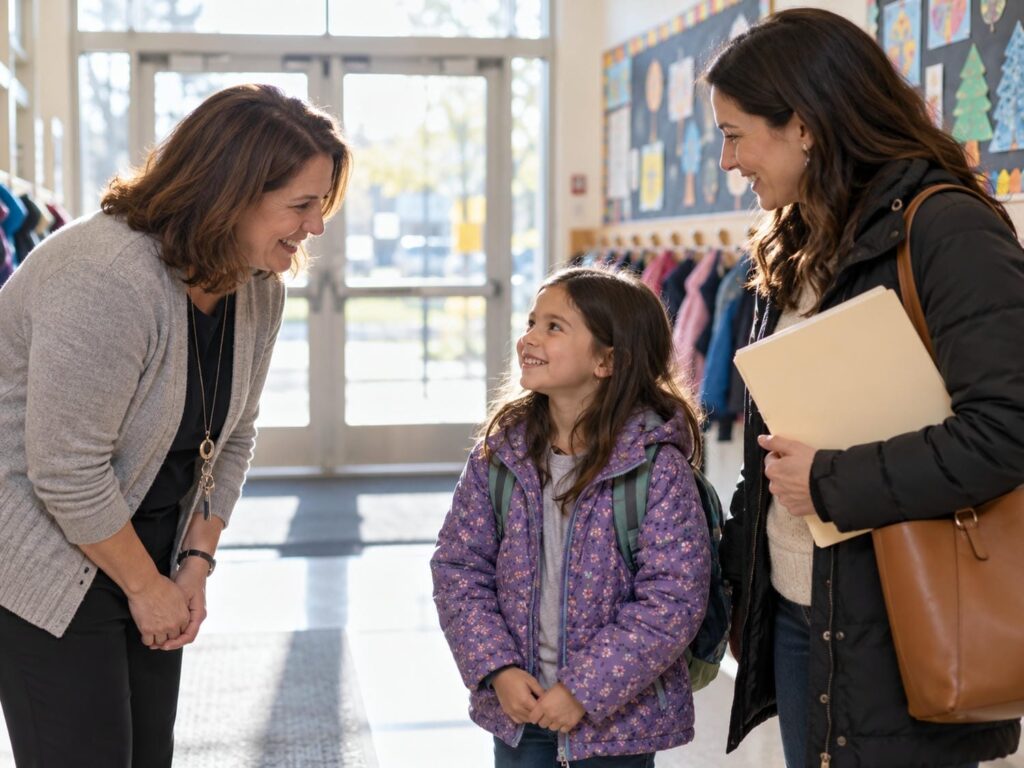
The second fear is the one about moving back. There are no diploma credits to lose before Grade 9, anywhere in Ontario, so a move in the elementary years is a placement decision rather than a credit transfer. Placement is the receiving principal’s decision, made from your child’s records and a conversation with your family, rather than from a separate rule for children arriving from a private school.
What the Receiving Principal Looks At
The Ministry’s policy here is specific, and it is more reassuring than most parents expect. The principal of the receiving school is guided by documentation, which includes attendance records, report cards and other assessment materials, along with conversations with the student, the family and school staff. From that, the principal decides an age-appropriate placement, and then notes the result of the assessment and the reasons for the decision in the student’s Ontario Student Record. There is a process, it is written down, and it runs on paper you are able to supply.
If the move happens at high school age, the Ministry has a route for that as well. The principal reviews what the student has already learned and grants equivalency credits for placement, which is how a school works out where the student belongs. The Ministry’s own policy names a non-inspected private school as one of the normal places a student arrives from, and that is worth holding on to. This is a provided-for situation, not an exception somebody has to argue for.
What the York Region District School Board Asks You to Bring
The practical half of a move is local. A family registering with the York Region District School Board brings originals: proof of the student’s name and date of birth, such as a birth certificate, a statement of live birth or a passport, immigration documents where they apply, and three proof-of-residency documents, one from the board’s first category and two from its second. The more useful half of that list is what the board will not accept. A driver’s licence and a health card are both on the not-acceptable list, and so are a lease, a credit card statement and a cell phone bill.
Notice what all of those documents are about: who your child is and where you live. Not one of them is academic. The academic picture comes from what your current school has kept, which is why what a school records about your child matters long before the day you need it.
How a Montessori Program Covers Comparable Ground on a Different Schedule
Montessori is not a different syllabus. It is a different ordering and timing of comparable ground, and the divergence has structural causes worth understanding before you sit in a classroom and try to read what is happening in front of you. If a Montessori school is on your shortlist, that ordering is what you will be watching for in the classroom.
Multi-Age Cycles Instead of Single Grade Years
The structure is not a style choice, and it is written into a published Canadian standard. Montessori Canada’s accreditation requirements set a multi-age grouping in every classroom, with a three-year span in the Casa and Elementary classrooms, an uninterrupted work cycle of two and a half to three hours at those levels, and the full range of Montessori materials in the room so that learning runs in sequence. One teacher in each classroom holds an age-appropriate diploma from an accredited teacher training institute.
Those requirements exist to protect one thing: a child working at their own pace toward goals set for that child individually. The long uninterrupted cycle is what makes the pace possible, and the full set of materials is what the child works through. The three-year span is load-bearing rather than a scheduling convenience, which becomes obvious once you look at how multi-age classrooms work day to day: the older children teach, the younger ones watch the work they will reach next, and a child who needs another year inside a cycle simply has one.
Comparable Ground, Reached in a Different Order
The Montessori elementary environment covers geography, biology, history, language, mathematics, science, music and other forms of artistic expression. The Association Montessori Internationale describes that environment as being for children ages 6 through 12, sometimes divided into a younger and an older group and sometimes running as one. Much of that ground is the ground the provincial subject areas cover, which is the substance of the whole comparison: the territory overlaps heavily even though the map is drawn differently.
The two do not line up, and saying so is far more useful than blurring it. Montessori groups children into multi-year age bands. Ontario organizes its program grade by grade. They are not a year-for-year match, and that is the design rather than a fault in it. The practical consequence is the part that matters to a parent. A child may meet a given expectation earlier or later than the provincial grade schedule places it, while covering comparable ground across the cycle.
What Montessori Canada’s Accreditation Measures
Montessori Canada’s accreditation requirements measure Montessori practice. They cover the age span in each class, the length of the uninterrupted work cycle, the full range of materials, the diploma the teacher holds, and whether the school is guided by Maria Montessori’s educational philosophy. Matching a provincial curriculum is not among them.
That distinction is worth holding on to, because an accreditation badge and a curriculum answer are two different things. Montessori Canada’s accreditation requirements tell you a school runs a genuine Montessori program against a published standard, which is a real and checkable thing to know. Where that program lines up with Ontario’s is a separate question, and the only place to get it answered is the school itself, in detail, for the year your child is in.
Getting a Straight Answer From the Schools on Your List
“Do you follow the Ontario curriculum?” is a yes-or-no question the province does not check below Grade 9, which is why it tells a parent so little. Here is the version that separates schools quickly: “Show me where your program sits against the provincial subject areas for my child’s year, and show me what you keep on record.”
We are glad to answer it. La Maison Montessori House is a French immersion, Montessori-inspired private school serving York Region families, with programs for Pre JK to SK and Elementary students and an individualized approach that means a teacher can tell you where one child sits without going to look it up. If you are weighing a Montessori private school in York Region against the rest of your shortlist, come and watch a work cycle run, and get in touch whenever you would like to arrange a visit.
Frequently Asked Questions
Yes, and it is the same diploma because the province controls the route to it. The Government of Ontario is the only authority that can determine the courses of study a student must complete to obtain the Ontario Secondary School Diploma. At the private high schools it inspects, the Ministry confirms the standard of instruction in the credit courses meets its curriculum requirements and its assessment and evaluation practices, and every student seeking the diploma has to earn the literacy graduation requirement. The credential belongs to the province, wherever the courses were taken.
Almost certainly not, because elementary placement is age-appropriate and documentary rather than a test a child passes or fails. The principal of the receiving school is guided by attendance records, report cards and other assessment materials, together with conversations with your family, your child and school staff, and then places the child and notes the decision and the reasons for it in the student’s Ontario Student Record. The stronger your child’s records, the more straightforward that conversation is.
The provincial report card is the school boards’ instrument, and the Ministry administers the publicly funded system, so a private school reports in its own way. That is why two private schools can send home reports that look nothing alike and both be doing their job properly. What matters more than the format is what the report tells you: whether it says something specific about your own child rather than something general about the class, and whether the school keeps a copy. Those are the reports a receiving principal can read later.
That is a question about the individual school rather than about the method, and Montessori Canada’s accreditation requirements will not settle it. Those requirements measure the age span in each class, the work cycle, the materials and the teacher’s diploma. Matching a provincial curriculum is not among them. A Montessori program can cover ground comparable to the provincial subject areas on a different schedule, so ask the school where its program lines up with Ontario’s for your child’s year, and expect a detailed answer rather than a label.
Kindergarten in Ontario has its own provincial program, set out separately from the Grade 1 to 8 curriculum, and a school the Ministry does not inspect is not required to follow any of it. At that age, coverage is not the most useful thing to look at anyway. It is whether the room is building language, number sense, attention and the ability to work alongside other children, and whether an adult can describe what your child did last Tuesday and what it told them.
Keep what a receiving principal is guided by: attendance records, whatever your school issues in place of a report card, and other assessment materials, including work samples with dates on them. Ask for your copy each reporting period rather than all at once at the end, because staff change and files move. If a narrative report is what your school produces, keep it exactly as it is. A principal reading it is looking for specifics about your child, and a narrative that carries them travels perfectly well.