
Preparing Montessori Grade 6 Students for High School Success
Category: Insights
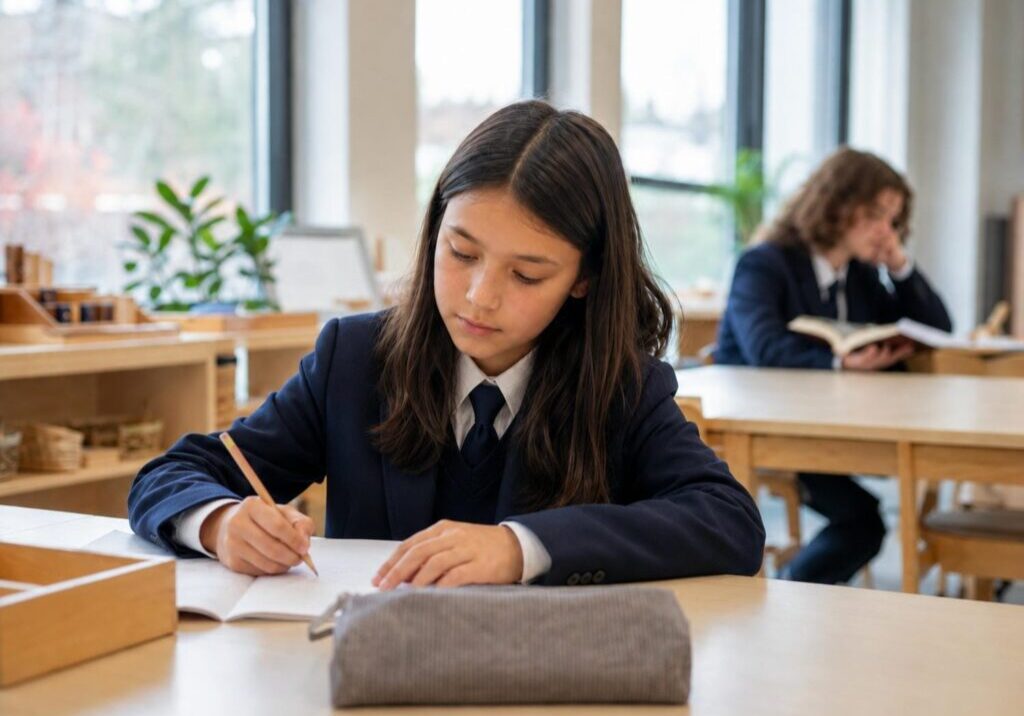
Your Grade 6 student is not leaving next year. Elementary here runs through Grade 8, so she has two more years in this building, and at a Grades 1-8 private school those two years are the runway rather than the countdown. The move happens into Grade 9, and Grade 9 is where Ontario starts counting: credits, a transcript, a diploma clock ticking toward a total. That is what the Montessori Grade 6 high school transition actually looks like from where you are standing, which is two more years here and then the jump.
So the useful questions now are the mechanical ones. What genuinely changes in Grade 9. What the Ontario diploma asks for in plain numbers. Which month each decision gets made in York Region, and what you want in a folder before any of it starts. A student who successfully completes Grade 8 is promoted and admitted to a secondary school in Grade 9, so there is no gate to clear. There is a plan to build, and Grade 6 is the year families start building it.
What Actually Changes in Grade 9
Right now she works in a multi-age Montessori classroom, with real say over the order of her work and a guide who has known her for years. Grade 9 is a different architecture. Not necessarily harder, but built on a different assumption about who decides what happens next, and it helps to know exactly which parts of the day change.
Work Starts Being Counted in Credits
A credit is granted for a course scheduled for at least 110 hours, and a student earns it by finishing that course with a final mark of 50 percent or higher. That one sentence contains most of what changes.
In Grade 9 a student typically takes eight courses. Eight timetabled blocks, eight teachers, eight separate sets of due dates. The work itself is rarely the shock. What is new is that it converts into countable units on a permanent record, on the school’s schedule rather than on hers. A course is finished or it is not, with no version of the long work cycle where a piece keeps improving until it is right.
Grade 7 and 8 Marks Do Not Go on the High School Transcript
The Ontario Student Transcript opens when a student enrols in a secondary school course. Grade 7 and Grade 8 marks never appear on it, and neither does anything else she has done since Casa. A parent quietly worried that a shaky term in Grade 7 will follow her daughter into the diploma years can stop worrying about that.
What Grade 7 and 8 report cards do instead is travel with her as part of her record, which is a different job and a smaller one. There are no credits at all before Grade 9, so there is nothing waiting to be converted, transferred or assessed. She arrives at the same starting line as every other Grade 9 student in the province.
Grade 9 Is Single Stream, So Nobody Picks a Lane at 13
In Grade 9 all courses are offered in a single stream, either as de-streamed or open courses. Locally that means Grade 9 math, science, English and geography run as de-streamed courses.
The public board’s reason for it is the useful part. De-streaming gives students and families more time to understand pathways and to keep options open before the Grade 11 and 12 choices that genuinely narrow things. Course types do reappear in Grade 10, so the fork has not disappeared. It has moved later. A Grade 8 student is no longer asked to choose a future in the winter she turns 13, which is a real relief for a family that has spent years refusing to sort children into levels.
What the Ontario Diploma Asks For
The diploma is a counting exercise, and seeing the whole count now rather than in Grade 10 is worth five minutes, because two items on the list can be started before Grade 9 begins. The province sets out the full requirements for parents.
The requirements come in three kinds: a total to reach, a set of subjects nobody skips, and a few standalone conditions that sit outside the credit count.
| Requirement | What it means | When it happens |
| 30 credits | The total needed for the diploma | Grades 9 through 12 |
| 17 compulsory credits | The set subjects everyone takes, including 4 English, 3 math, 2 science, 1 French | Spread across all four years |
| 13 optional credits | Chosen by the student | Mostly Grades 11 and 12 |
| At least 2 credits earned online | Part of the 30, not extra | Any secondary year |
| Literacy requirement | Usually met by passing the provincial literacy test | Typically Grade 10 |
| 40 hours community involvement | Volunteer hours | Can begin the summer before Grade 9 |
| Financial literacy requirement | Modules inside the Grade 10 Career Studies course | Grade 10 |
The Newer Requirements Worth Knowing Now
Three items are newer than most of what a parent will have heard second-hand. At least two of the 30 credits have to be earned online, which is a scheduling matter rather than an extra load. One compulsory credit comes from technological education, and one more from a STEM-related group that includes business studies, computer studies, cooperative education, mathematics, science and technological education. A financial literacy requirement runs inside the compulsory Grade 10 Career Studies course, where students need at least 70 percent on the modules, worth 5 percent of the final course mark. None of the three asks anything of you in Grade 6, but all three are worth knowing when someone tells you the diploma has not changed.
The Literacy Requirement, and the Second Chance Built Into It
Every secondary student has to meet the literacy graduation requirement, and most meet it by passing the provincial literacy test. The test measures reading and writing across all subjects up to the end of Grade 9, not English class alone.
A student who is not successful can retake it, and there is also a Grade 11 or 12 literacy course that satisfies the requirement and earns a credit at the same time. The second attempt is part of the design rather than an exception.
The takeaway for a Grade 6 family is not test preparation. It is that written work in science, history and geography is literacy practice, so the best use of Grades 7 and 8 is keeping writing central across every subject rather than treating it as one subject’s job.
The Requirement You Can Start Before High School
The requirement is 40 hours of community involvement, and hours can be collected starting the summer before Grade 9. That detail is the whole opportunity.
Families who leave it to Grade 11 end up hunting for a chore that fits a form. Families who start early let the child pick something she cares about and stay with it: a summer reading program at the library, a community garden, assisting a coach at a day camp, a food bank shift alongside a parent. Two summers of that covers the requirement without anyone noticing.
Keep a simple log of dates, hours and a contact name from the first shift. Schools approve their own activities, so ask before a long commitment rather than after one.
The Montessori Grade 6 to High School Transition, Year by Year
Work backwards from the fixed point. Secondary school open houses run in the fall of Grade 8, and Grade 9 course selection follows that winter, in February at the York Region District School Board. Every other decision arranges itself around those two events. Each board publishes its own open house calendar, registration deadlines and document list for the current year, and those dates move even though the rhythm does not.
Grade 6: Learn How the System Counts
This year’s job is understanding, not action. In the public system every student in Grades 7 to 12 develops an Individual Pathways Plan and reviews it twice a year, which means the other system begins its formal planning a year from now. A parent asking these questions in Grade 6 is not early. She is exactly on schedule.
The real work of Grade 6 happens at home. Hand over more of the logistics: the alarm, the bag, the deadline she forgot. Let the small consequences land. Grade 6 and Grade 7 are cheap years to fail in, and Grade 11 is not.
Grade 7: First Looks, and the French Question
Grade 7 has two jobs, and the second one gets missed constantly. The first is to start looking at secondary schools with no pressure on, a year before everyone else is looking. That is the benefit of a two-year runway: you visit out of curiosity instead of urgency.
The second job is French. Ask each school you are considering how it places a student arriving from a private French program, and ask in Grade 7 rather than Grade 8, because the answer sometimes changes what you apply for. If an independent secondary school is on your list at all, that route also begins in Grade 7.
Inside our own building the Grade 7 and 8 years shift too, with history and geography replacing the Grade 1 to 6 social studies strand.
Fall of Grade 8: Open Houses
The fall of Grade 8 is a visiting season, and it rewards a little preparation. Find your home school by address. Check the open house calendar. Look at what programs each school offers, work out how she would actually get there, and read the graduation requirements before you walk into the first gym.
Specialized program information nights tend to run earlier in the fall than the general open houses, so a family waiting for the main calendar can miss the ones for arts, technology or regional programs entirely.
Go to more than one, even if you are sure. And bring the child. She notices things you will not.
The Winter of Grade 8: Course Selection
This is the decision point everything else builds toward. At the public board, Grade 9 courses are selected in February of Grade 8 through the board’s online pathway planning tool, with support from school staff. The Catholic board runs its own course selection window that winter. Either way it is roughly eight courses.
It is not a hard wall. But a family still deciding in April has lost the easy version of the decision and is negotiating with a timetable that is already built.
And because Grade 9 is single stream, this is a selection of subjects and interests rather than a choice of pathway. It carries less weight than it feels like it does.
French Placement Is the Part That Does Not Carry Itself Forward
Start with the reassuring half. French does not stop at Grade 8 for anybody, because every secondary student in Ontario earns at least one French credit. What does not carry itself forward is her placement in immersion or extended French, and that is the piece families most often drop.
In Ontario’s publicly funded English-language schools French is required from Grade 4 through Grade 8, with a minimum of 600 hours of Core French by the end of Grade 8, and Core French there continues through Grade 9. Those numbers are rules about board schools. The French program she is in now runs on its own design, which is why a receiving school will ask you to describe it.
What French Looks Like After Grade 8, Counted in Credits
Beyond that one credit, French becomes a countable plan rather than a hope. A student working toward the extended French certificate accumulates seven credits in French: four French-language courses and three other subjects taught in French. The French immersion certificate takes ten, made up of four French-language courses and six other subjects taught in French. The local public board describes the same ten-credit threshold for its immersion certificate.
The part parents miss is what credits in French means in practice. It is not ten years of French class. It is geography, history, civics or science delivered in French, which is far closer to what she does now than a language course is.
What to Ask, and What to Bring
Secondary schools set their own entry point for immersion and extended French. There is no single provincial door she walks through, so the only reliable answer comes from the school itself. Ask how it places a student coming from a private French program, and ask in Grade 7.
Then bring something to the conversation. Request a written summary of your child’s French instruction before you approach a secondary school: what she has studied in French, in which subjects, and for how long. It is the piece the receiving school will want, and the piece families most often arrive without.
For comparison, local board immersion moves to an equal split of French and English instruction from Grade 4.
Records and Paperwork: What Actually Has to Move
This part is smaller than most parents expect. There is no evaluation waiting at the door of a board high school. There is an administrative job: a record that has to move, a request that starts it moving, and copies you keep yourself.
How Admission to Grade 9 Actually Works
At a board high school there is no audition. A student who successfully completes Grade 8 is promoted and admitted to a secondary school in Grade 9. That rule is about the boards specifically. An independent secondary school is a different case, because most run their own entrance assessment or interview.
Ontario’s inspection program applies to private high schools that grant diploma credits, and elementary schools sit outside it. That is not a gap in her record. Nobody has credits before Grade 9, so there is nothing missing and nothing to bring.
Which leaves the conversation with a board high school where it belongs: on documents and course selection, not on proving she is ready.
Keep Your Own Copies of Everything
Boards establish an Ontario Student Record for every student enrolled with them, and a board keeps that record for a long time: report cards for five years after a student leaves, the folder itself for fifty-five. A private school may or may not keep one, which is why your own copies matter.
So keep your own copy of every report card from Grade 1 onward, in one place, scanned. Two reasons make that concrete rather than fussy. An independent secondary school will usually ask to see them, and a request between two schools takes as long as it takes, so there will be a week when you are the fastest route to a document somebody needs.
Who Asks for What, and When
You do not request your child’s record. The receiving school’s principal does, in writing, which removes the main thing parents brace for. Where the receiving school is a private school, which is the independent route, the transfer also needs a written statement of consent signed by a parent.
So your job is small and specific. Tell us where she is going. Sign the consent if one is needed. Keep your own copies.
Registering for Grade 9 in York Region
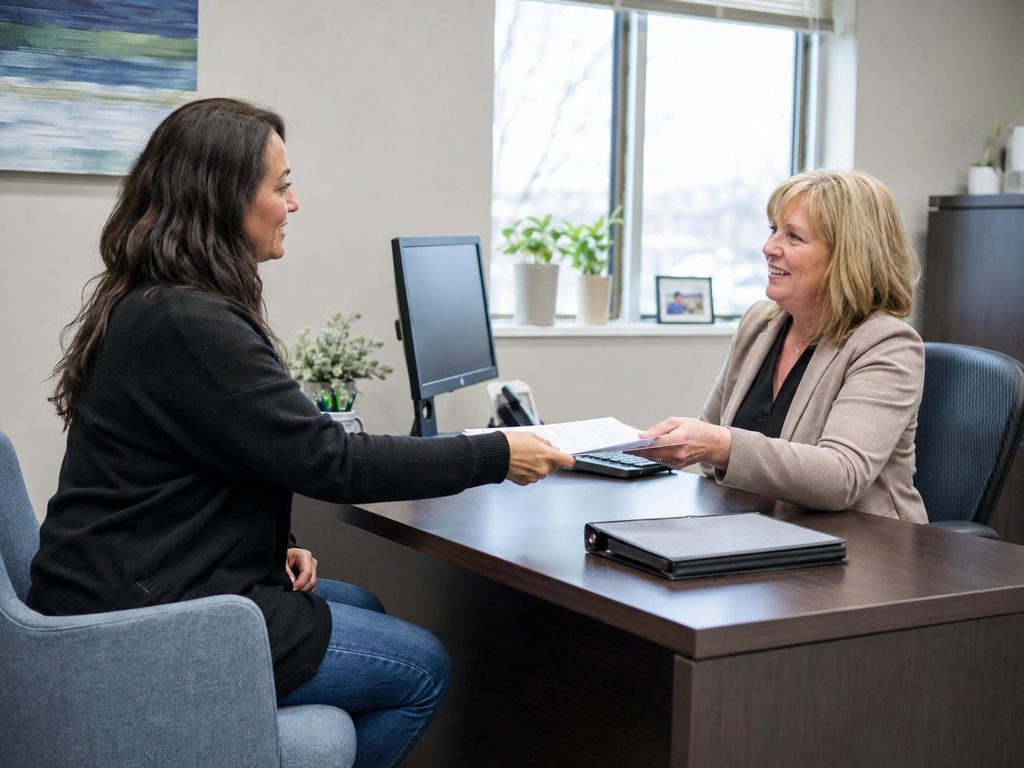
Three destinations, and for a family that has paid for private education since Casa the independent route is often first on the list rather than third: the public board, the Catholic board, or an independent secondary school. For either board, registration works the same way whether your child is coming from a public school or from us, because your address determines the school and you book an appointment with that school. What differs is the paperwork you bring. The independent route runs on its own and earlier calendar. Whether to stay independent at all is a different question, and how York Region families compare the two systems turns on cost, class size and fit rather than on registration mechanics.
The Public Board Process, Step by Step
The public board publishes one process, and it is short.
- Find your home school with the board’s school locator, using your home address.
- Book an appointment with that school, or with the community education centre for your area.
- Complete the registration form, which for Grade 9 is the board’s secondary registration form.
- Gather your supporting documents.
- Attend the appointment.
The documents are where families get caught. You need proof of the student’s identity, which means a birth certificate, statement of live birth or passport. You also need three proofs of address: one from the board’s stronger category, such as a property tax bill or MPAC assessment notice, plus two everyday ones, such as a recent utility bill or government correspondence. Originals are required, not photocopies.
The rejections surprise people: a driver’s licence, a health card, a lease agreement, a credit card statement and a cell phone bill are not accepted.
Book the appointment with the high school itself, and do it before the summer if you can. Summer staffing is thin across both boards, and a July phone call is the slowest way to do this.
The Catholic Board Asks for a Different List
The Catholic board publishes a separate admission page for Grades 9 to 12, and the list on it is genuinely different. It asks for proof of age, proof of status in Canada, and, where the family is eligible, designation of or proof of separate school support. A student under 18 who is not living with a parent also needs guardianship or court documentation.
The board’s secondary registration page adds two proofs of residency and runs the registration online. Registration opens in the autumn, the board’s own students face the earlier deadline, students new to the board have a later one, and course selection follows that winter. Your child is in the second category, which buys you a little time. A specialty program needs its own application on top of the registration form.
Bottom line: the high school list is not the same as the one for the younger grades. If you are registering with the Catholic board, ask what it needs for separate school support.
If You Are Looking at an Independent Secondary School
For a family already committed to private education this is frequently the first option, and it is the one the board calendars do not describe.
The shape of it is consistent. Applications typically open in the fall of Grade 8 and close well before the boards’ winter course selection. Most schools run their own entrance assessment or interview. Report cards and a reference are usually asked for, which is another reason to keep every report card. Financial aid, where a school offers it, runs on its own earlier deadline and is the piece families discover too late.
The practical consequence is a calendar one. If this route is on your list at all, the work starts in Grade 7, not Grade 8.
What Actually Helps the Move Go Well
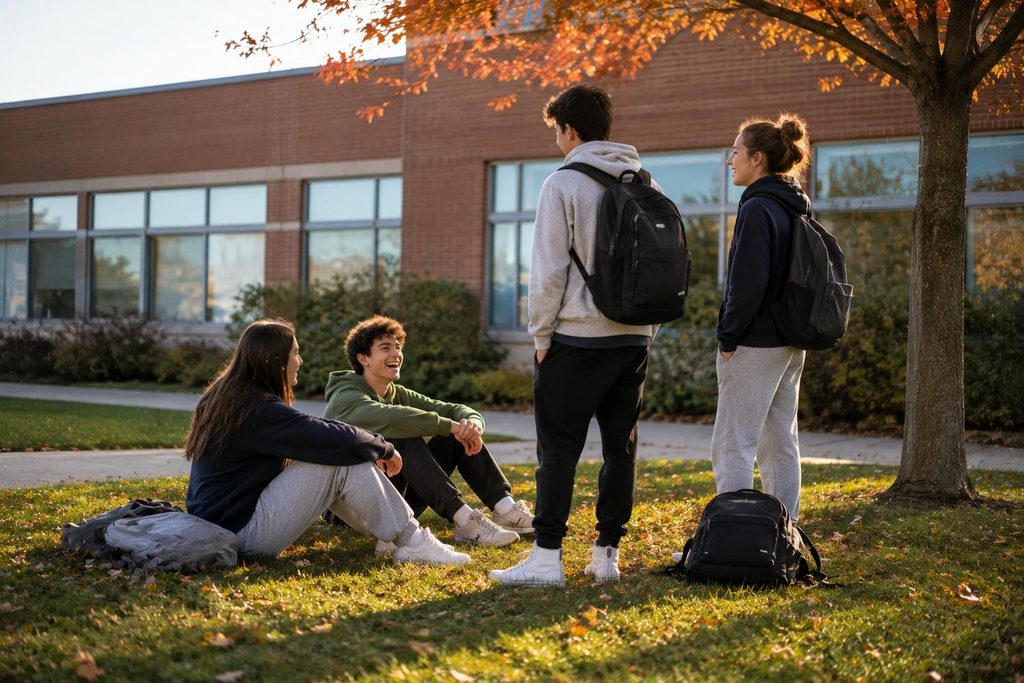
Parents prepare for content. They drill math over the summer. The child who struggles in Grade 9 usually struggles with four deadlines in one week, not with fractions. What changes at the jump is architecture rather than difficulty, and architecture can be practised at home.
The Habits Grade 9 Prices In
The research on Montessori is strongest in the early and elementary years, and it gets thinner once students move on to high school. That is the honest starting point, and it comes from the largest systematic review of Montessori outcomes published to date, in Campbell Systematic Reviews.
What the evidence consistently shows is a measurable advantage in the habits high school runs on: organizing your own work, staying with something difficult, and managing your own attention. On executive function specifically, the evidence is reasonable rather than overwhelming.
That matters here because of what those habits meet in Grade 9. Eight timetabled courses. Deadlines set by somebody else. Marks that convert into credits at 110 hours and 50 percent. Those are structures a self-directed student is unusually well set up for.
The Social Side Is the Part Parents Underestimate
Research on the move to secondary school in general, not on Montessori and not on Ontario, is blunt about the risk. Around two in five students do not reach their expected progress after the transition. Self-esteem tends to dip through the transition years, and worries about the new environment and about relationships track with higher anxiety.
The protective factor in the same research is unglamorous. A stronger sense of belonging at the new school goes with fewer mental health difficulties.
So do the boring things. Get her into an activity, a team or a summer program where she will know faces before September, and go to the open houses together so she can talk to students rather than only to teachers.
What Grades 7 and 8 Are Really For
The two years are for the timetable muscle, not for content catch-up. Hand over responsibility on purpose. Let deadlines come from outside the house. Let small failures happen while they are still cheap, because a missed assignment in Grade 7 costs nothing and the same habit in Grade 11 costs a credit.
One research point is worth adding. At the middle school stage, Montessori students have reported greater interest, energy and intrinsic motivation while doing academic work than matched peers in traditional programs. That is a finding about the experience of school rather than about later marks, and it is still the thing worth protecting through Grades 7 and 8. A student who likes working keeps working once the work gets counted.
Planning the Runway With Us
The two years between Grade 6 and Grade 9 are the part a family can actually use, and using them well is mostly a matter of deciding early what they are for. At La Maison Montessori House our elementary school program runs through Grade 8, so students finish here and move on to Grade 9. Grades 7 and 8 are where we hand students more of their own planning on purpose, in small groups where an adult notices when it slips. As a French immersion Montessori school serving York Region families, we can also put your child’s French instruction in writing before you approach a secondary school.
If you would like that summary, or a conversation about how the Grade 7 and 8 runway works, get in touch and we will map it out with you.
Frequently Asked Questions
No. The elementary program runs through Grade 8, and completing Grade 8 is what admits a student into Grade 9 at a secondary school. Grade 6 is when the planning starts, not when anyone packs up. She has two more years here.
Open houses run in the fall of Grade 8, and Grade 9 course selection follows that winter, in February at the public board. The rhythm holds every year and the dates do not, so each board publishes its own current calendar and deadlines. In practice, first looks happen in Grade 7 and the decision lands in the winter of Grade 8.
Yes, in defined circumstances. Exceptional Grade 8 students may take a secondary school course with parental consent and the principal’s approval. It is a provision rather than a goal, arranged between the family and the secondary school.
No, and nothing is lost by that. Credits begin in Grade 9, so a Grade 8 graduate normally has no credits to convert and nothing to have assessed. What her Montessori years produce is the working habits the credit system begins pricing immediately.
No. Private schools choose whether to take part in the provincial assessments, so plenty of students arrive in Grade 9 without having written one. The ones that carry weight come later: the Grade 9 mathematics assessment counts toward the course mark, and the literacy test is a graduation requirement. Both are written inside the secondary school.
Yes, as a credit stream. Every student earns at least one French credit in secondary school, and immersion and extended French continue as certificate streams: ten French credits for the immersion certificate, seven for extended French. Secondary schools set their own entry point for those programs, so ask the school directly, and ask in Grade 7.
She retakes it. There is also a Grade 11 or 12 literacy course that satisfies the graduation requirement and earns a credit at the same time. The second attempt is built into the system rather than being an exception someone has to arrange, which is why a first result is not the event it feels like.