
How Multi-Age Classrooms Work In Montessori Grades 1 To 6
Category: Insights
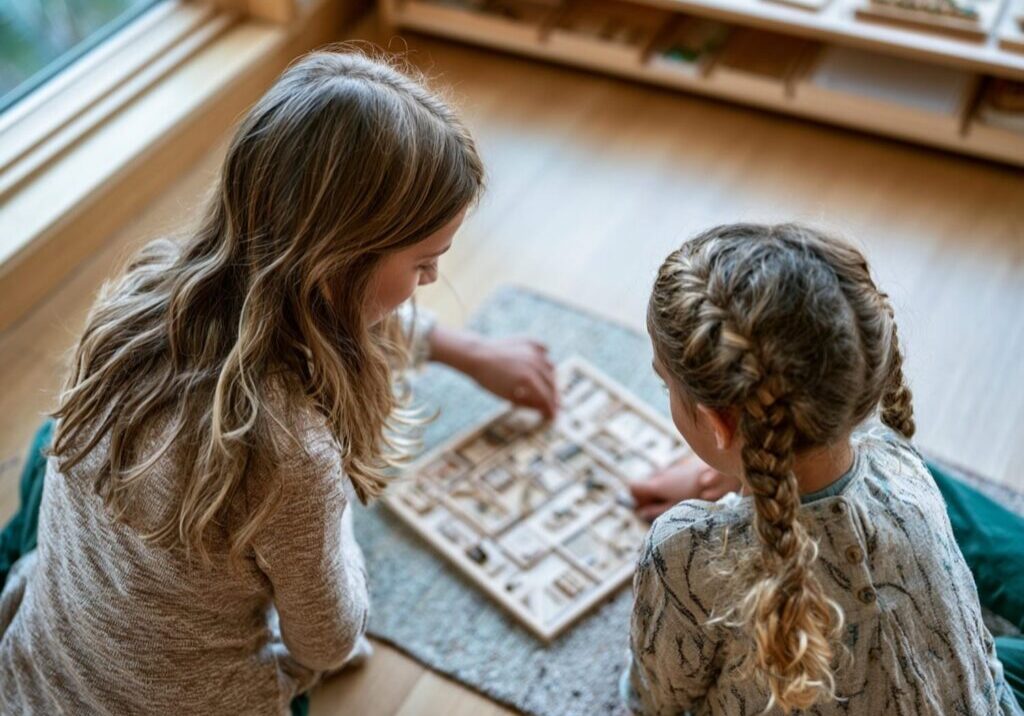
A multi-age Montessori classroom is not a mixed-grade shortcut. In a Montessori elementary program, students work within a prepared environment where younger children learn from older peers, older children practise leadership, and teachers guide each child through lessons, observation, independent work, and group projects. The model works because students are grouped by developmental stage, not only by age or grade label.
For parents, the question is usually practical: how does one classroom support different levels at the same time? The answer is that Montessori classrooms are designed for that purpose. Teachers introduce lessons to individuals or small groups, observe progress closely, and give children structured freedom to work at an appropriate pace.
Multi-Age Montessori Classrooms At A Glance
A strong multi-age Montessori classroom is organized around readiness, responsibility, and community. Students are not all expected to do the same worksheet on the same day. Instead, they work through lessons, materials, projects, reading, math, research, and presentations in a way that reflects their stage of development.
| Feature | How It Works | Why It Matters |
| Mixed Age Range | Students learn in a shared elementary community | Builds continuity, peer modelling, and leadership |
| Individual Lessons | Teachers guide students based on readiness | Supports different paces without holding students back |
| Peer Learning | Older students model and younger students observe | Reinforces confidence and community |
| Independent Work | Students practise responsibility and follow-through | Builds focus, ownership, and time management |
| Group Projects | Students collaborate across ages and strengths | Develops communication and problem-solving |
| Teacher Observation | Teachers track progress and readiness closely | Keeps the classroom individualized and purposeful |
The main idea is simple: multi-age Montessori classrooms are intentional. The classroom is built so students can learn from teachers, materials, peers, and their own growing responsibility.
What A Multi-Age Montessori Classroom Means
A multi-age Montessori classroom brings children from more than one grade level into a shared learning community. That may sound unusual if your family is used to single-grade classrooms, but in Montessori, the wider age span is part of the design.
The model gives children time to grow into leadership, see future work before they reach it, and build confidence through continuity. It also gives teachers a longer view of the child’s development, rather than treating each school year as a separate reset.
It Is Grouped By Developmental Stage, Not Just Grade
Montessori classrooms are designed around developmental stages. In elementary, students may share a classroom community across more than one grade because they are developing related capacities: reasoning, collaboration, independence, curiosity, and responsibility.
That does not mean students are grouped randomly. The environment, materials, routines, lessons, and teacher observation all need to support different levels within one community. When this is done well, students can work at their current level while still belonging to a classroom that stretches them.
This is why the phrase “multi-age” needs context. It is not just about the ages in the room. It is about how the classroom is prepared to support growth across those ages.
It Is Different From A Traditional Split Class
Parents sometimes hear “multi-age” and picture a split class where one teacher alternates between two grade-level programs. Montessori is different because the classroom is designed from the start for varied pacing, individual lessons, small-group instruction, independent work, peer modelling, and long-term development.
In a traditional single-grade model, the class often moves through the same material at the same time. In Montessori, a teacher may introduce one lesson to a small group, observe another child practising a material, and guide an older student toward deeper project work.
Families who want a broader comparison of classroom models can see how Montessori and traditional education differ in pacing, structure, and the role of the teacher.
It Still Requires Clear Academic Progression
Multi-age does not mean vague. A strong Montessori elementary program should be able to explain how children progress in language, math, science, geography, history, French, learning skills, physical education, and other learning areas.
At LMMH, the elementary program describes Grades 1 to 8 learning across language, math, science and technology, learning skills, geography, history, physical education, and advanced French immersion. Parents should expect any multi-age program to explain how those subject areas are introduced, practised, and extended over time.
Ontario’s guidance on combined classes recognizes that these groupings may include more than one student group and says grade expectations and assessment procedures should be clearly outlined. Montessori multi-age classrooms are a distinct educational model, but the broader point still matters: parents should understand how learning expectations and progress are handled.
Why Montessori Uses Multi-Age Classrooms
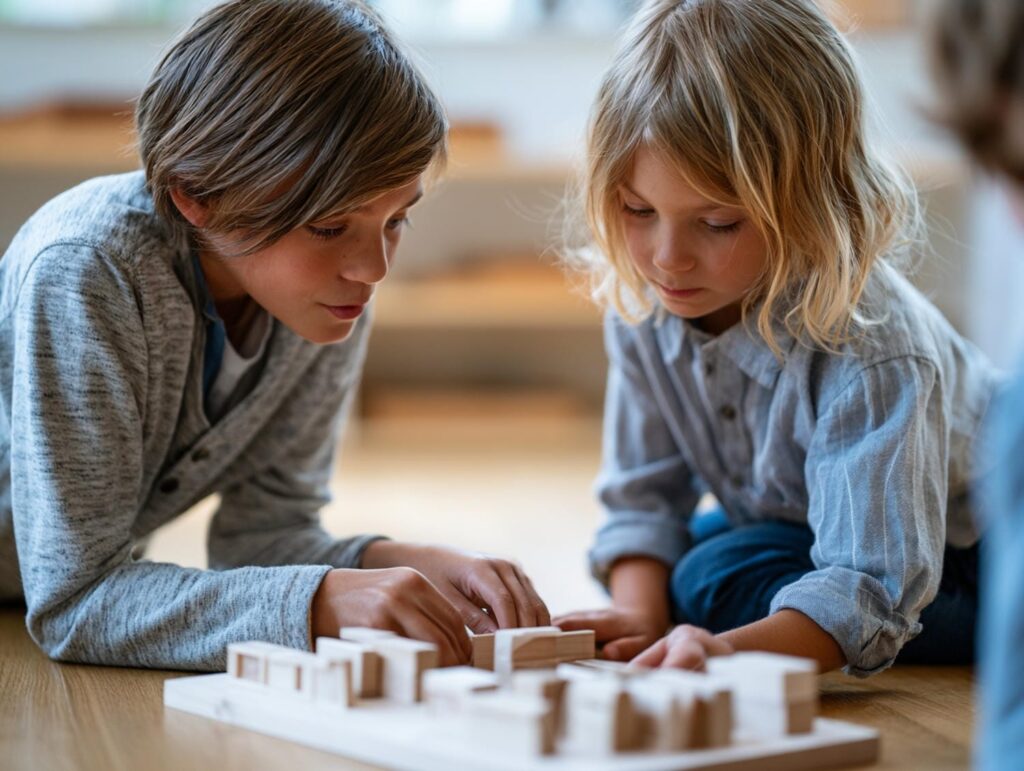
Montessori uses multi-age classrooms because children grow through observation, practice, leadership, and community. Younger students benefit from seeing what is possible. Older students benefit from modelling, explaining, and taking greater responsibility.
This structure also supports a more natural rhythm of learning. Not every child reaches every skill on the same day, and a multi-age classroom gives teachers more room to guide students based on readiness.
Children Learn From Repetition And Observation
In a multi-age classroom, younger students regularly see older students working with more advanced materials, using more mature language, managing bigger projects, and carrying more responsibility. This gives younger children a picture of where they are going.
Older students also benefit from repetition and review. When they revisit a concept, model a routine, or explain an idea, they often strengthen their own understanding. The classroom becomes a learning community rather than a line of students moving through the same content at the same pace.
This kind of observation is quiet but powerful. A younger child may not be ready for advanced work yet, but they begin to understand what growth looks like.
Older Students Build Leadership By Helping Others
Leadership in Montessori is not only about being assigned a title. Older students learn to model focus, care for materials, respectful communication, patience, collaboration, and responsibility. Those habits matter because they shape the tone of the classroom.
LMMH’s FAQ explains that Montessori values the lessons of community that happen in larger, multi-age classes. It also notes that a larger, multi-age class encourages students to rely on themselves and their peers as resources, rather than going directly to a teacher first. In elementary, LMMH says students benefit from a larger classroom because there is significant group and project work.
That does not mean older students become unpaid assistants. Their academic growth remains central. Leadership is one way they deepen confidence and responsibility while continuing to move ahead.
Younger Students Gain Confidence By Seeing What Is Possible
Younger students do not need to guess what growth looks like. They can see older peers reading more complex texts, solving bigger math problems, giving presentations, using French, managing journals, and participating in longer projects.
This makes growth feel visible and reachable. Instead of seeing advanced work as distant or intimidating, younger children see it as part of the classroom path.
The result can be motivating. A child who sees an older student work with confidence may begin to imagine themselves taking on that responsibility later.
How Teachers Manage Different Levels In One Room
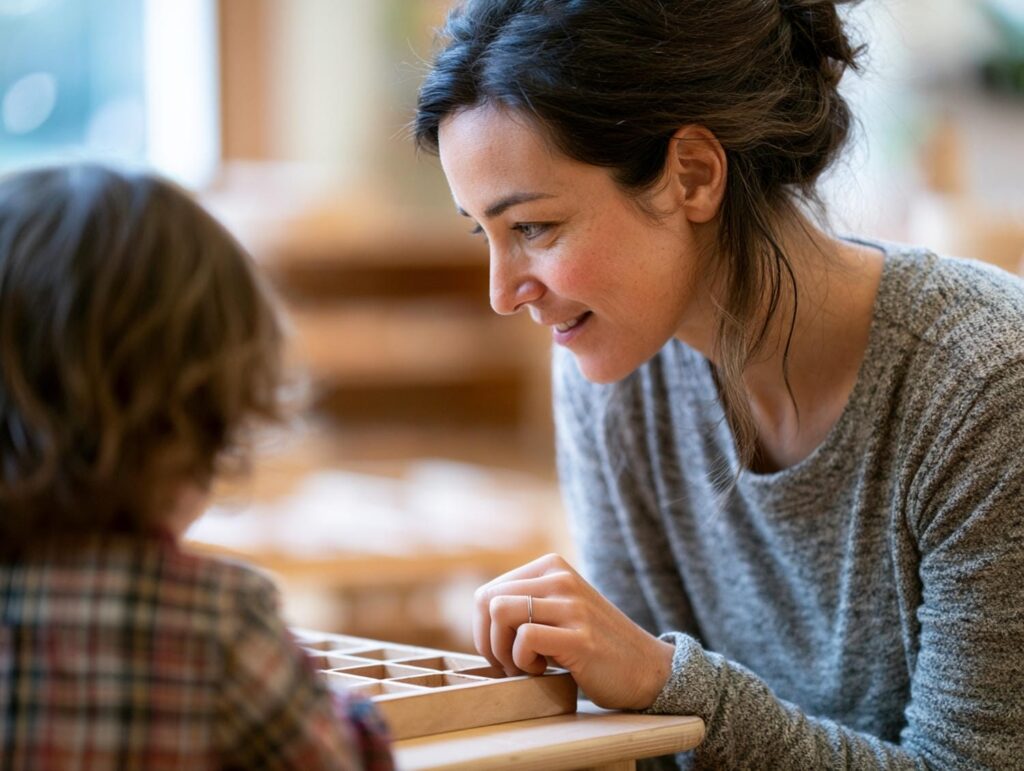
The most common parent concern is practical: how does a teacher manage different levels in one room? In Montessori, the answer is not that the teacher teaches every grade at once in a traditional way. The answer is that lessons, observation, materials, and work plans are organized differently.
Teachers guide students individually and in small groups, then observe how children practise, apply, and extend their work. The classroom becomes active and purposeful because students are not waiting for the whole group to move together.
Lessons Are Often Given To Individuals Or Small Groups
In Montessori elementary classrooms, not every child needs the same lesson at the same time. Teachers may introduce a material or concept to one child or a small group when they are ready, then observe how the child practises and applies the work.
This helps prevent students from being held back by the group or pushed forward before they are ready. A child who needs more repetition can receive it, while a child ready for deeper work can continue moving.
Small-group lessons also support collaboration. Students can learn with peers who are at a similar point in a sequence, even if they are not the same age.
Observation Drives The Next Lesson
Teacher observation is central to Montessori. The teacher watches how students use materials, how they solve problems, how they manage time, how they interact with peers, and when they are ready for the next lesson.
LMMH’s FAQ explains that Montessori teachers continuously observe students, take notes, assess progress, and determine whether a student has mastered a piece of work or area of knowledge and is ready to move on. This daily observation is part of how the classroom stays individualized and purposeful.
For parents, this is an important reassurance. Multi-age learning depends on close teacher attention, not loose supervision.
Students Learn To Manage Work Over Time
A multi-age classroom depends on students gradually building responsibility. Younger students may need more guidance, while older students are expected to manage more of their work, planning, and follow-through.
LMMH’s FAQ says students begin using journals in Year 3, and sometimes earlier depending on the child, to record daily and weekly work, plan ahead, and track what remains to be completed. That is a practical example of how time management becomes part of elementary life.
This matters because independence is not just a personality trait. It is taught, practised, and supported over time.
What Learning Looks Like Across Grades 1 To 6
Multi-age learning becomes easier to understand when you picture the classroom in action. In one room, different students may be working on language, math, geography, science, research, French, writing, or presentation skills at different levels.
The classroom should not feel scattered. It should feel purposeful, with children working on tasks that match their readiness and contribute to a broader learning community.
Language And Reading
In language work, students may be reading, writing, studying grammar, building vocabulary, preparing oral presentations, or working on advanced writing projects at different levels. The teacher can guide each child or small group based on readiness.
LMMH’s elementary program describes language work that includes complex literary studies, advanced writing projects, and dynamic oral presentations. In a multi-age classroom, that progression can happen across several years as children move from foundational skills toward more refined expression.
This helps parents see that multi-age does not water down language learning. It can create room for both foundational support and meaningful extension.
Math And Problem Solving
In math, younger students may use concrete materials to build number sense, while older students may explore geometry, fractions, operations, financial concepts, or multi-step problem-solving. The same room can hold different levels of work because the materials and lessons are sequenced.
Parents may worry that younger children will be overwhelmed or older children will be bored. The better question is whether the child receives the right lesson at the right point in their progression.
Montessori math works best when students move from concrete understanding to more abstract thinking with careful guidance. That progression can happen naturally inside a well-managed multi-age classroom.
Science, Geography, And History
Montessori elementary learning often connects subjects. A study of geography may lead into history, culture, art, writing, measurement, maps, or science. Students begin to see relationships between ideas rather than treating each subject as separate.
LMMH’s FAQ explains that Montessori teaches familiar subjects such as math, science, history, geography, and language through an integrated approach that weaves strands of the curriculum together. It gives the example of how studying a map of Africa may lead into art, history, inventions, ancient Egypt, hieroglyphs, writing, pyramids, and geometry.
That kind of connected work can support a multi-age room well because students can enter a topic at different levels. A younger student may explore maps and vocabulary, while an older student may research, write, present, or extend the study into math and history.
French Immersion And Peer Modelling
For LMMH families, the multi-age model also matters because French is part of the broader school environment. Younger students can hear older peers using French more confidently, while older students have more chances to model vocabulary, presentation skills, and daily communication.
Peer modelling can make French feel more lived, not only taught. A younger student may hear French in classroom routines, group work, songs, presentations, or social exchanges, while older students strengthen their own confidence by using language in front of others.
Understanding how Montessori and French immersion support one another helps clarify why younger students hear French in daily routines while older students gain confidence using it in front of peers.
How Multi-Age Classrooms Support Social Development
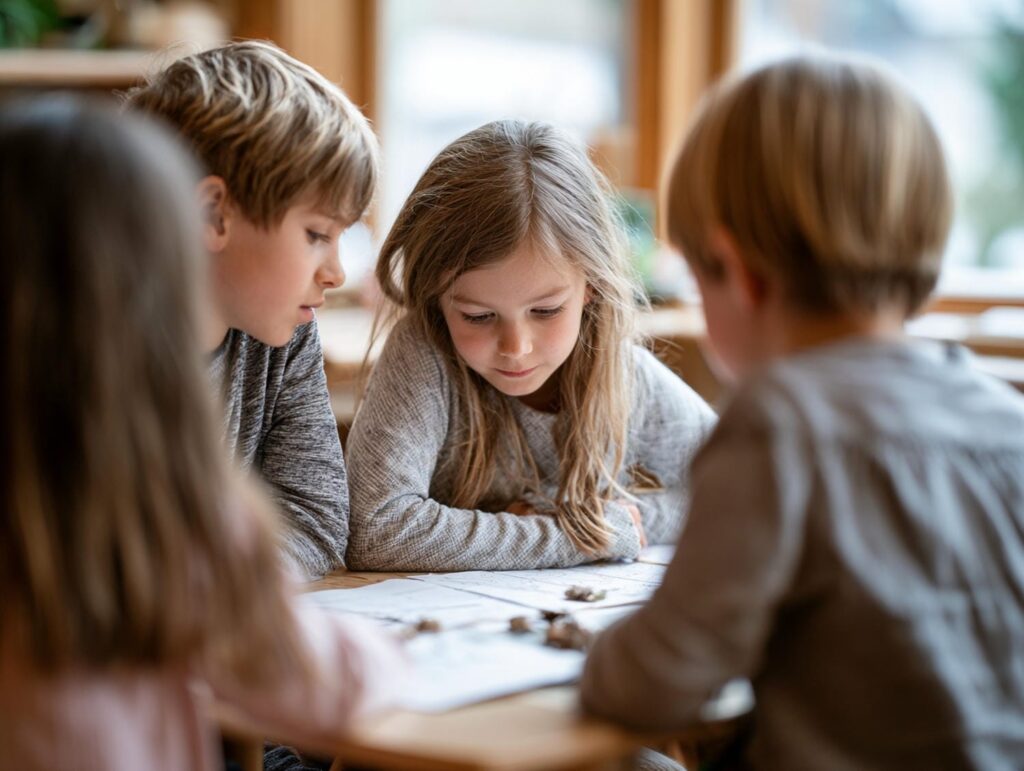
A multi-age classroom is not only an academic structure. It is also a social environment where children practise communication, patience, responsibility, and respect with peers at different stages of maturity.
This can be especially helpful in elementary years, when children are building confidence, learning to manage conflict, and discovering how their choices affect a community.
Students Practise Social Skills With Different Ages
Multi-age classrooms give children regular practice interacting with younger peers, older peers, and classmates at different levels of maturity. That can build patience, empathy, confidence, and communication.
LMMH’s FAQ says social skills should be taught and practised with guidance, just like any other skill. It also explains that students are coached through conflict in a smaller, safe, and inclusive community.
This matters because social growth is not left to chance. Children learn how to communicate, cooperate, and solve problems with adult guidance.
Conflict Becomes A Guided Learning Opportunity
Conflict does not disappear in a Montessori classroom. Children still disagree, misunderstand, compete, and need help. The difference is that conflict can become a guided learning opportunity rather than only a discipline issue.
A strong Montessori environment teaches children how to communicate respectfully, listen to another perspective, make repairs, and take responsibility for their role in a situation. These are real life skills.
Parents should look for a school that can explain how it handles conflict clearly. A calm and specific answer usually tells you more than a promise that problems rarely happen.
Students Learn Community Responsibility
In a multi-age classroom, students learn that they affect the whole environment. They care for materials, help keep routines steady, respect others’ work, and contribute to a shared classroom culture.
This is more than being friendly. Community responsibility means children learn that freedom comes with care for the room, the materials, the people, and the learning around them.
That lesson is central to Montessori independence. Children are not simply choosing work for themselves. They are learning how to function well inside a community.
Will Older Students Still Be Challenged?
This is one of the most important questions parents ask about multi-age classrooms. The concern is fair. Older students should not be held back because younger students are in the room.
In a well-guided Montessori environment, the older student’s role is not to become an assistant instead of a learner. Leadership is part of the model, but academic growth remains central.
Older Students Can Move Ahead When Ready
A multi-age Montessori classroom should not hold older students to the pace of younger classmates. Because lessons are based on readiness, older students can move into more advanced work when they are prepared for it.
This is one of the strengths of the model. A student who is ready for deeper math, more complex writing, larger research work, or more independent planning does not need to wait for every child in the room to catch up.
The key is teacher guidance. Parents should ask how the school ensures older students receive new lessons, meaningful challenge, and opportunities to extend their learning.
Teaching Others Reinforces Mastery
When older students explain a concept, model a routine, or support a younger peer, they often deepen their own understanding. Explaining requires organization, clarity, patience, and confidence.
This does not replace academic challenge. It adds a different kind of challenge. A child who can solve a problem may understand it even more deeply when they can explain the process to someone else.
Leadership also builds identity. Older students begin to see themselves as capable contributors, not just as children completing assigned work.
Project Work Creates Natural Extension
Group projects can give older students room for deeper research, writing, presentation, leadership, and problem-solving. In a multi-age room, the same broad topic can support different levels of work.
LMMH’s FAQ notes that elementary students benefit from larger classrooms because there is significant group and project work. The elementary program also includes advanced French immersion, science and technology, learning skills, geography, history, physical education, and other areas that can support deeper work for older students.
For parents, the practical question is not whether older students are in a room with younger children. The question is whether older students are still receiving appropriate challenge and responsibility.
Will Younger Students Get Enough Support?
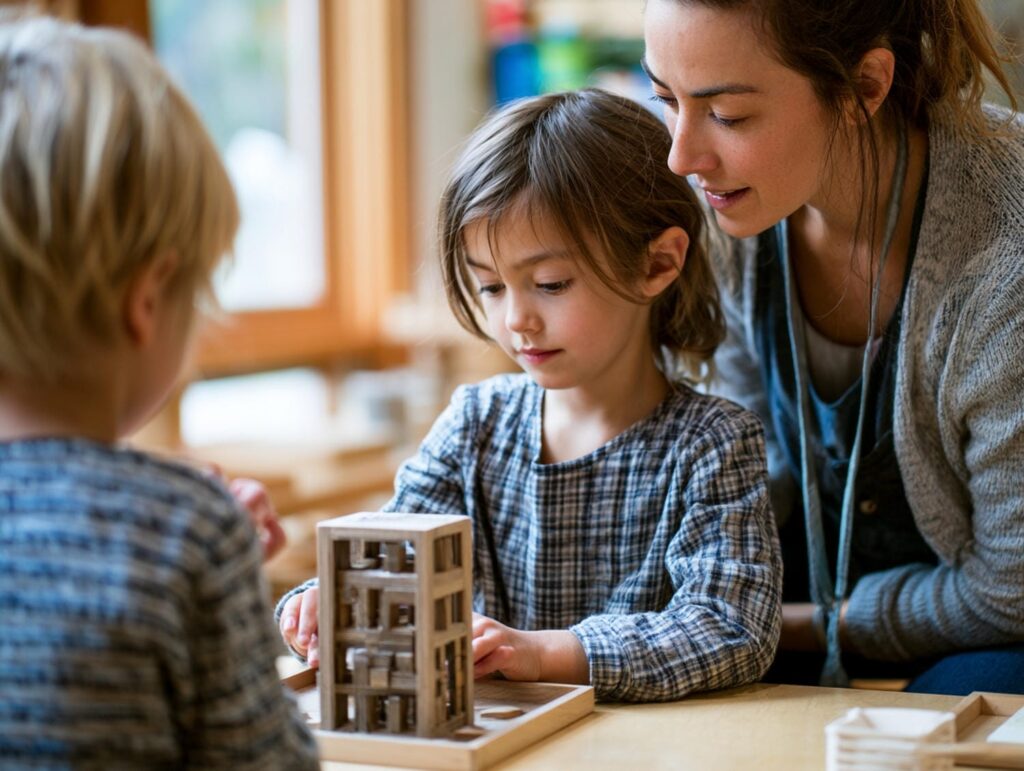
Parents also worry from the other side. They may wonder whether younger students will be lost in a room where older children are doing more advanced work. In a strong Montessori classroom, the answer should be no.
Younger students are supported by teacher lessons, observation, prepared materials, classroom routines, and peer modelling. They are not expected to learn only by watching older classmates.
Younger Students Receive Direct Lessons Too
Younger students still receive direct lessons, guidance, correction, repetition, and observation at their own level. Peer learning supports teacher instruction, but it does not replace it.
A younger child may receive a lesson with one or two classmates, practise with a material, return to the teacher for guidance, and repeat the work until they are ready for the next step. That is structured learning.
Parents should ask how often younger students receive lessons and how teachers decide when a child is ready to move forward.
The Prepared Environment Gives Clear Next Steps
Montessori materials and classroom routines help younger students know what to do next. The environment supports independence through accessible materials, clear expectations, and work that is matched to the child’s readiness.
LMMH’s About content describes classrooms that are designed to foster independence, concentration, and joy for learning. It also says materials are inviting and accessible so children can engage in learning activities with minimal guidance from adults.
That does not mean children are left on their own. It means the environment helps them take the next step with confidence and appropriate support.
Peer Modelling Makes Growth Visible
Younger students benefit from seeing older students work with care, confidence, and focus. They can observe what independence looks like, how materials are handled, how projects are planned, and how students communicate with teachers and peers.
This modelling can make classroom expectations easier to understand. Instead of hearing only adult instructions, younger children see those expectations lived around them.
The combination of direct guidance and peer modelling can make younger students feel supported rather than overwhelmed.
How Progress Is Tracked Without Everyone Doing The Same Work
Parents often ask how progress is tracked if students are not all doing the same work at the same time. The answer should be specific. A multi-age classroom needs careful observation, clear records, teacher judgement, and strong communication with families.
Progress should not be invisible. Parents should be able to understand what their child is learning, what has been mastered, what needs more practice, and what comes next.
Teachers Track Individual Readiness
A multi-age classroom depends on knowing where each child is. Teachers track lessons, practice, mastery, work habits, readiness, and areas that need more support.
LMMH’s FAQ explains that Montessori teachers observe daily, take notes, assess student progress, and determine when a student is ready for additional presentations or work. This is how teachers decide when to introduce the next lesson and when to revisit a concept.
This kind of tracking is essential. Without it, multi-age learning could become unclear. With it, the model becomes individualized and purposeful.
Work Samples And Conferences Help Parents Understand Progress
Parents need clear communication. Work samples, conferences, teacher observations, and the child’s own reflection can help families understand progress without relying only on traditional letter or number grades.
LMMH’s FAQ explains that Montessori teachers closely and continuously observe and assess each student’s progress and readiness to advance. It also notes that family conferences may include samples of work, teacher assessment, and possibly the child’s self-assessment.
This helps parents see the child’s development in context. Progress is not only a grade. It is the growth of skill, independence, confidence, and understanding.
Testing Can Still Be Introduced When Appropriate
Some parents worry that Montessori students will not be ready for formal testing later. This is a reasonable question, but it should not be treated as an either-or choice. Montessori progress tracking and formal test readiness can both exist.
LMMH’s FAQ says elementary students complete the CAT test every year so they become familiar with formal testing. That gives students exposure to test-taking while keeping daily learning grounded in Montessori observation, materials, and independent work.
The goal is balance. Children can build deep understanding and still learn how to handle formal assessments when the time is right.
How Multi-Age Classrooms Prepare Students For Later Schooling
Multi-age Montessori classrooms can support later-school readiness by giving students repeated practice with independence, planning, communication, collaboration, and adaptation. These habits matter long after one lesson is finished.
This section should be understood as a fit-based benefit, not a guarantee. Every child is different, and later transitions depend on the child, the school, and the next environment.
Students Build Independence Over Several Years
Because students stay within a broader classroom community over time, they can gradually take on more responsibility. They move from watching and practising to modelling, leading, planning, and managing more complex work.
This is where multi-age continuity matters. A child does not need to become independent all at once. They grow into it through repeated experience and teacher guidance.
LMMH’s journal practice is one example of this. Students begin learning how to record work, plan ahead, and track what remains to be completed, which turns independence into a daily habit.
Students Practise Communication And Collaboration
Multi-age classrooms give students daily practice communicating with different peers. They learn to ask for help, offer help, explain ideas, listen to others, and work through group responsibilities.
These skills support later school readiness because students need more than academic knowledge. They need the confidence to communicate, the patience to collaborate, and the judgement to manage shared work.
This is especially relevant for older elementary students. Leadership, presentation, group work, and peer support all help students practise roles they will use in later schooling.
Students Learn To Adapt To New Contexts
Students who practise independence, responsibility, time management, and collaboration may be better prepared to adjust to new settings. They have experience working with different ages, managing tasks, and participating in a classroom community.
LMMH’s About page includes alumni reflections that connect later success to Montessori habits, including time management, academic foundations, organization, motivation, and an easier transition into the public system.
These stories should not be treated as a universal promise. They are useful evidence that the habits built in a Montessori environment can carry forward.
What Parents Should Look For During A Visit
The best way to understand a multi-age Montessori classroom is to see it in action. The room may not look like a traditional classroom, so parents need the right lens for what they are seeing.
Instead of asking whether every child is doing the same thing, ask whether the work looks purposeful, the movement looks respectful, and the teacher can explain how lessons and progress are managed.
Look For Purposeful Movement, Not Chaos
In a multi-age Montessori classroom, students may not all be sitting in rows doing the same task. Some may be working independently, some in pairs, some in a small group lesson, and some on a project.
The important question is whether the movement has purpose. Do students know what they are doing? Are materials handled respectfully? Are children able to focus? Does the room feel active but calm?
Different does not mean disorganized. A Montessori classroom may look less uniform than a traditional classroom, but it should still feel intentional.
Ask How Lessons Are Planned Across Levels
Parents should ask how teachers decide who receives which lesson, how progress is tracked, and how students move from one level to the next. The school should be able to explain this clearly.
Strong answers should include observation, readiness, small-group lessons, materials, work tracking, and communication with parents. Vague answers are a sign to ask more questions.
Families preparing for a school visit can use a set of private school tour questions to probe teaching approach, child fit, communication, French immersion, and daily classroom life.
Ask How The Classroom Supports Both Leaders And Beginners
Parents should ask how older students are challenged and how younger students are supported. A strong answer should include teacher guidance, materials, peer modelling, independent work, and group projects.
This question gets to the heart of the model. Multi-age classrooms work best when both ends of the age range are supported well.
Listen for balance. Older students should not be held back, and younger students should not be left to catch up alone.
Is A Multi-Age Montessori Classroom Right For Your Child?

A multi-age Montessori classroom can be a strong fit for many students, but no model is right for every child. The best decision comes from understanding the classroom, observing the environment, and asking how the school would support your child specifically.
Parents should look for fit, not just philosophy. A strong idea still needs to work for the child who will live the school day.
It May Fit Children Who Benefit From Independence And Purpose
Multi-age Montessori can be a strong fit for children who enjoy hands-on learning, meaningful responsibility, movement, choice, and the chance to work at an appropriate pace. It can also benefit children who grow through observation and peer modelling.
That does not mean the child must already be independent. Montessori independence is developed through structure, guidance, and practice.
The better question is whether your child is ready to grow into more responsibility within a prepared and supportive environment.
It May Need Extra Discussion If Your Child Is Changing From A Traditional Classroom
A child moving from a single-grade or traditional setting may need time to adjust to choice, independent work, multi-age peers, and different forms of assessment. That adjustment is normal, but it should be discussed honestly.
Parents should ask how the school supports students during transition. They should also ask what readiness looks like and how the school determines whether a child can thrive in the environment.
Families thinking about fit and readiness can review what happens during a Montessori school assessment day before deciding whether the environment suits their child.
The Best Answer Comes From Seeing The Classroom In Action
Parents should not decide based only on the phrase “multi-age.” They should observe the classroom, ask how it works, and consider whether the environment matches the child’s learning style, social needs, and family goals.
A tour can make the model easier to understand. You can see whether students are working with purpose, whether teachers can explain progression, and whether the classroom culture feels calm and respectful.
The right answer usually becomes clearer when you see the model in practice rather than only reading about it.
See The Classroom Behind The Program
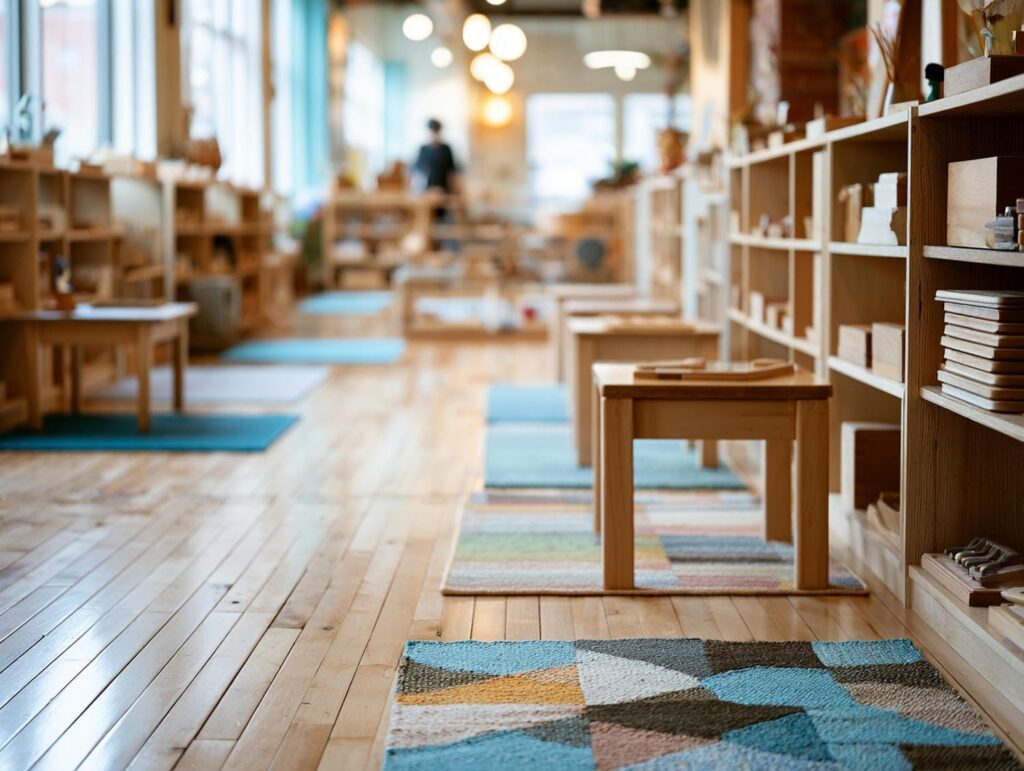
Multi-age Montessori classrooms make the most sense when you can see how independence, peer learning, teacher guidance, and academic progression work together. La Maison Montessori House describes itself as the only French Montessori school in York Region, highlights more than 20 years in business and 2,000+ students graduated, and says its educators are extensively trained in the Montessori method. Families who want to understand how this model works from Grades 1 to 8 can start with the elementary private school program, then prepare for a visit or connect with admissions for the next steps.
Frequently Asked Questions
A multi-age Montessori classroom groups students across a developmental age range rather than one single grade. Students receive lessons based on readiness, work independently and in groups, and learn from both teachers and peers. In Grades 1 to 6, this can support academic progression, leadership, peer modelling, and a stronger sense of classroom community.
Montessori uses multi-age classrooms to support peer learning, leadership, observation, independence, and continuity. Younger students learn by watching older peers, and older students reinforce understanding by modelling and helping. The model also gives teachers room to guide students based on readiness rather than assuming every child in the same grade needs the same lesson at the same time.
No. A split class usually combines two grade levels within a traditional structure. A Montessori multi-age classroom is intentionally designed for different levels, independent work, teacher observation, and individualized progression. The difference is not only the age range. It is the whole classroom design.
Yes, when the classroom is well guided. Older students can move into advanced work, take on project leadership, deepen research, and strengthen mastery by explaining ideas to younger peers. Parents should ask how the school ensures older students receive new lessons, meaningful extension, and continued academic growth.
Yes. Younger students still receive direct lessons, guidance, observation, and support. Peer modelling adds another layer of learning, but it does not replace teacher instruction. A strong Montessori teacher should be able to explain how younger students are introduced to materials, supported through practice, and guided toward the next step.
Teachers observe daily work, track lessons and readiness, review work samples, guide next steps, and communicate progress with parents. At LMMH, elementary students also complete annual CAT testing to gain experience with formal tests. Progress tracking should be clear, even when students are not all doing the same work at the same time.
Not every model fits every child. Multi-age Montessori can work well for students who benefit from independence, hands-on learning, peer modelling, and meaningful responsibility, but parents should tour and ask how the model would support their child specifically. The best answer comes from seeing the classroom in action and asking how the school supports both academic growth and social development.